


Kensington Palace’s latest exhibition, The Last Princesses of Punjab, has opened to the public, and I was fortunate enough to visit it with the curator. Marking what would have been Princess Sophia Duleep Singh’s 150th birthday, the exhibition shines a spotlight on the women of the Punjabi royal dynasty and their extraordinary and complex lives.
Through a rich collection of rarely seen objects, including paintings, photographs, jewellery, documents and personal letters, I journeyed through Princess Sophia’s life as a suffragette and an outspoken advocate, as well as meeting the women who shaped her life.
Read my full review to find out more about this compelling exhibition.
Everything you need to know about The Last Princesses of Punjab exhibition:
- Where: Kensington Palace, Kensington Gardens, W8 4PX
- Nearest tube: Queensway (Central) and High Street Kensington (Circle and District)
- When: Daily, 10am-6pm until 8 November 2026
- Best for: Visitors interested in British Empire history, royal stories, and the suffragette movement.
- Tickets: Included in standard entry to Kensington Palace.
Book your trickets to The Last Princesses of Pubjab exhibition.
What is The Last Princesses of Punjab exhibition about?
The exhibition unfolds across the sisters’ shared history, moving from the fall of the Punjab kingdom at the hands of the East India Company, to Duleep Singh’s exile in England, and finally to the lives his daughters carved out between two worlds, navigating identity, heritage, and belonging while using their position to advocate for change, with women’s suffrage at its heart.
I didn’t realise Britain once became home to the exiled princesses of Punjab – the daughters of Maharaja Duleep Singh, who was forced as a child to surrender his kingdom to the East India Company and, in turn, Queen Victoria, fulfilling her ambition to become Empress of India. Heartbreakingly separated from his mother, Duleep arrived in England aged just nine, converted to Christianity, and was absorbed into the world of British aristocracy, eventually becoming a favourite of Queen Victoria.
The exhibition reveals this unusual and deeply complex relationship between Duleep Singh and Queen Victoria, including her personal involvement in his education and later the lives of his daughters, ensuring they retained both status and a degree of financial independence. One striking detail to look out for is Queen Victoria’s autobiography, marked with a handwritten note personally addressed to Duleep.
As I explored further, I came to realise that Princess Sophia, Duleep’s daughter and Queen Victoria’s goddaughter, lived a truly extraordinary life. Her story evolves into one of conviction and activism, most notably through her role in the suffragette movement.
Exhibition highlights and what to expect
Who was Sophia Duleep Singh: between identity and activism
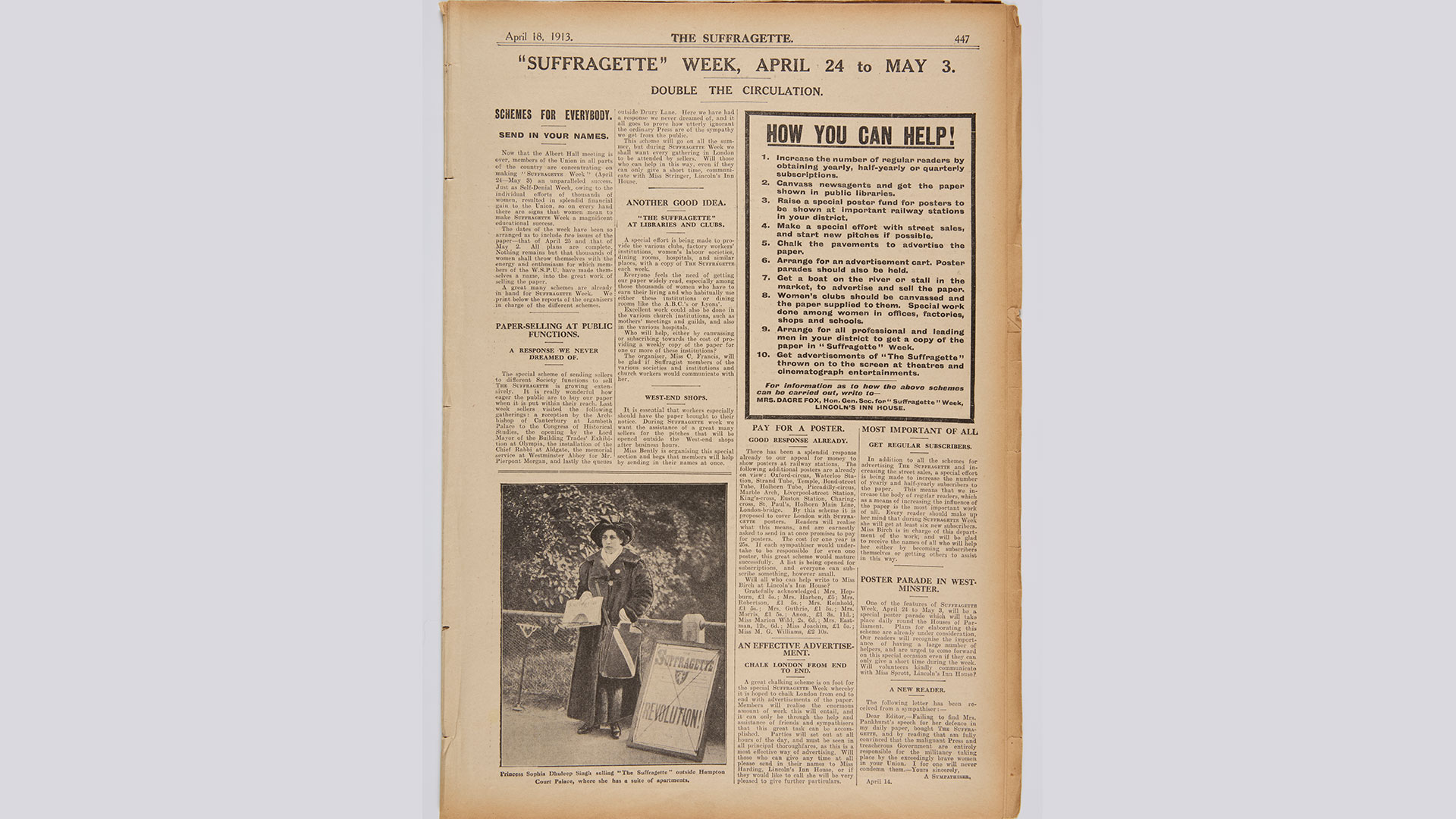
I was struck by how Sophia Duleep Singh used her royal status, connections and public visibility to support one of the defining causes of her time: the fight for women’s right to vote. Within this section of the exhibition, I came across a rarely seen copy of The Suffragette newspaper, showing Sophia herself on the front page selling copies outside her apartments near Hampton Court Palace.
Sophia was never afraid to place herself at the centre of controversy. She was taken to court not once but three times for refusing to pay taxes, famously arguing that if she was not considered fit for representation – meaning the right to vote – then she could not reasonably be expected to pay taxes.
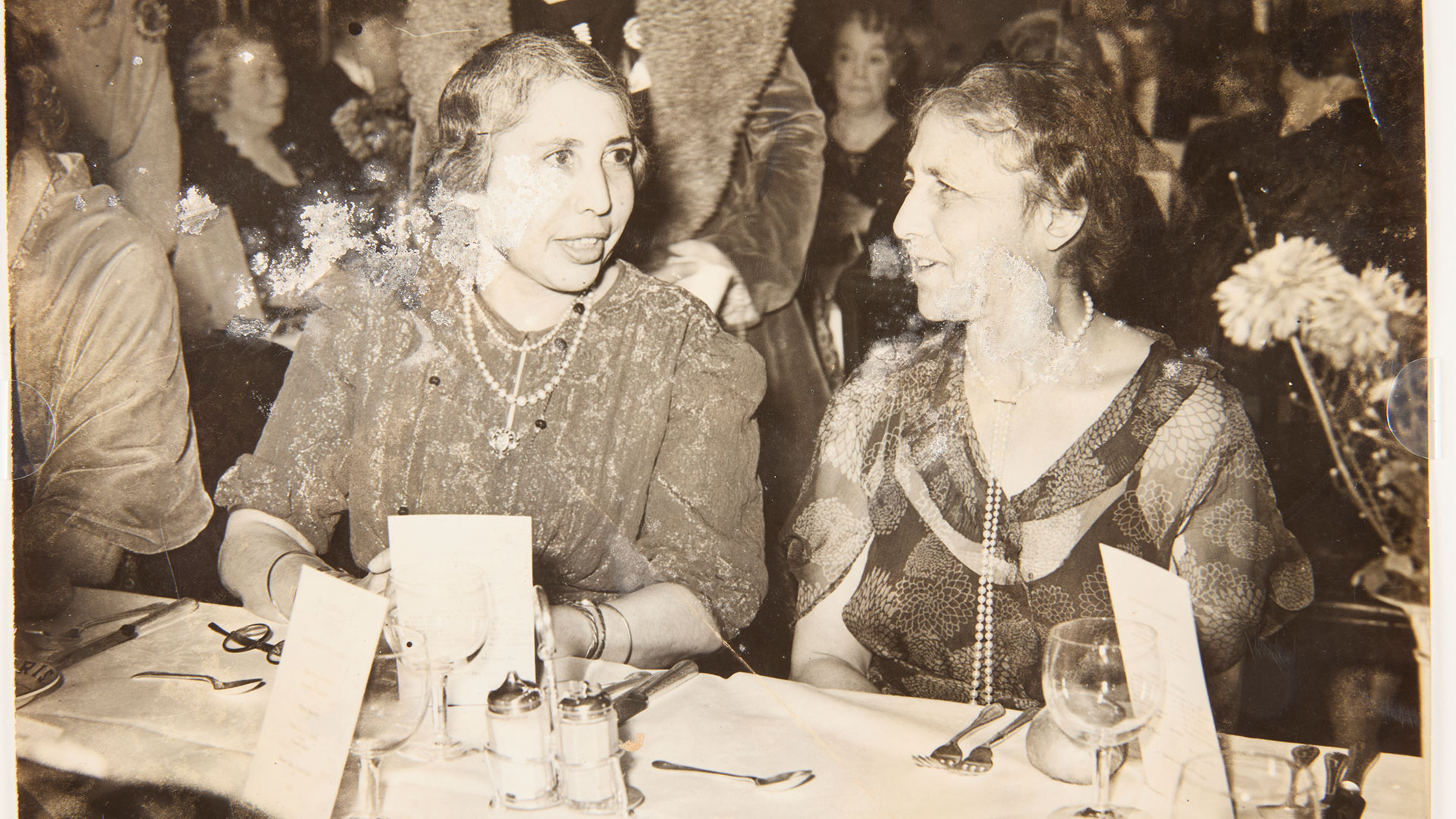
While history often remembers the Pankhurst sisters as the faces of the suffragette movement, the Duleep Singh sisters, Sophia in particular, were deeply involved, attending marches and using their status to amplify the cause. The exhibition captures this through striking imagery, including a photograph of Sophia and Catherine at a suffragette dinner held in memory of the first arrests in Manchester.
Artefacts of resistance: banners, census forms and letters
You can also see Sophia’s spoiled census ballot, joining the wider suffragette protest against state control. Like many others, she refused to be counted in a system that denied her representation, writing instead: “I have a conscientious objection to filling out this form.”
Moving through this part of the exhibition, I was struck not only by her conviction, but by the paradox of her position. She was a royal woman challenging the very structures she was born into, supported in part by the visibility and protection her status afforded, ironically enabled by the same establishment she was resisting.
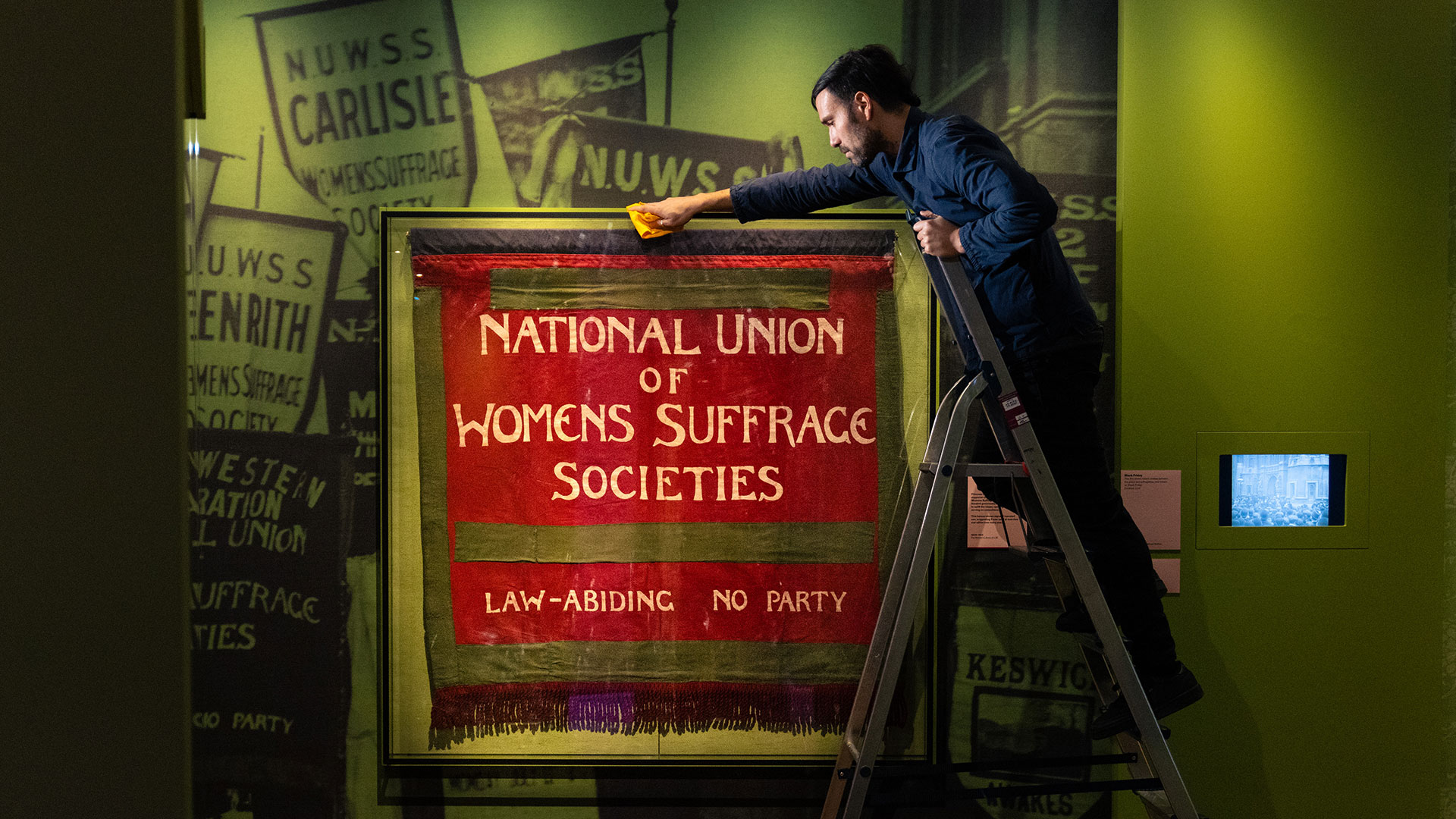
Princess Sophia Duleep is not the only woman I was introduced to. To understand Sophia, her vision of her place in the world, and the duties bound to her status, the exhibition brings to life the women who surrounded and influenced her throughout her life.
Family legacy and sisterhood, a story shaped by exile and resistance
Jind Kaur
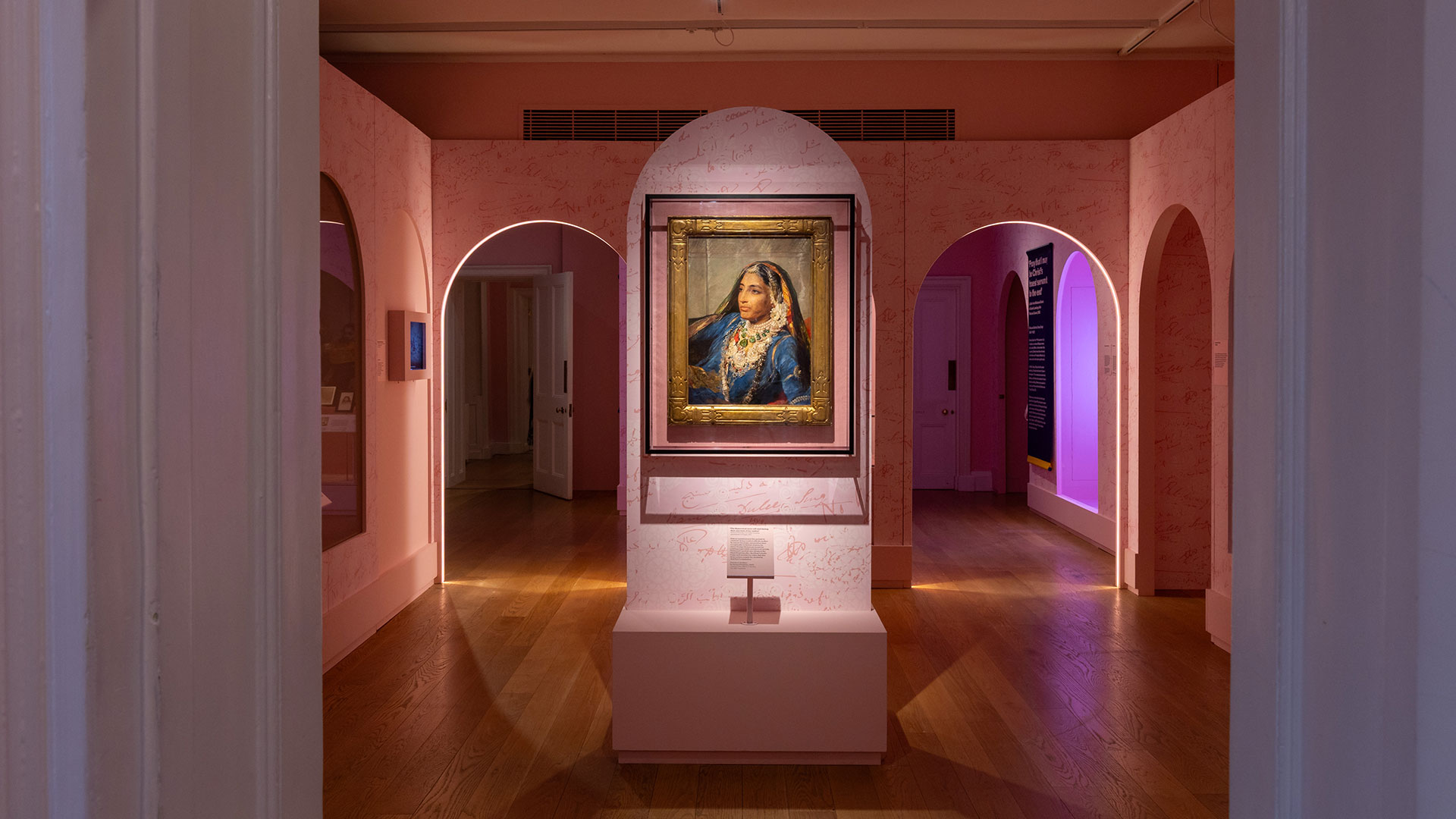
The family legacy of a lost kingdom, and the women at the heart of it as Maharani to the Maharajah of Punjab, is one that lingers throughout the exhibition. It is a story of resilience and strength in the face of extraordinary upheaval, none more so than Sophia’s grandmother, Maharani Jind Kaur. Separated from her son for 13 years, she ruled as his regent and became a powerful symbol of resistance against British rule. After years of exile and political turmoil, she was eventually reunited with her son before her death.
The exhibition brings her presence vividly to life, displaying a striking sketch of Jind Kaur created in preparation for George Richmond’s celebrated portrait, also on display. In it, she appears regal and defiant, dressed in rich silks and adorned with magnificent jewellery – including a pair of earrings exhibited alongside the works – reuniting these fragments of her image in one space.
Princess Cathrine Duleep
Catherine is a quietly inspiring figure throughout the exhibition. She played a key role in Sophia’s life, helping her find her voice and sense of identity in early adulthood. Although her personality and lifestyle are more reserved than her sister’s, Catherine’s influence runs deep.
After her time at Oxford with her sister Bamba, Catherine moved to Germany with her former chaperone, Lina Schäfer. What began as companionship ultimately grew into lovers, becoming a lifelong partnership. Today, Catherine is increasingly recognised as an important figure in LGBTQ+ South Asian history in Britain.

Letters exchanged between the sisters offer an intimate glimpse into Catherine’s deep affection for Lina, as well as the strong bond between them all. At a time when Nazi persecution was devastating many Jewish families, Catherine also acted with quiet courage, becoming a guarantor and opening her home in Buckinghamshire to refugees. A photograph shows Catherine with the Hornstein family in the garden. In it, young Ursula wears a family heirloom pendant passed down through generations, quietly linking together histories of memory and survival.
Princess Bamba Sutherland
The eldest sister, Princess Bamba Sutherland, is the the sister most clearly drawn to reconnecting with her roots in Punjab. Out of the three sisters, she is most often seen wearing Indian attire, and within this section of the exhibition I came across a striking display of three large pink dupattas, presented as part of their activism. I paused here - these draped textiles, traditionally worn over the upper body or over the head, feel both delicate and powerful. For Bamba, they may have offered a sense of ease compared to the restrictions of Victorian dress, while also becoming a way of reconnecting with her identity and her father’s lost kingdom.
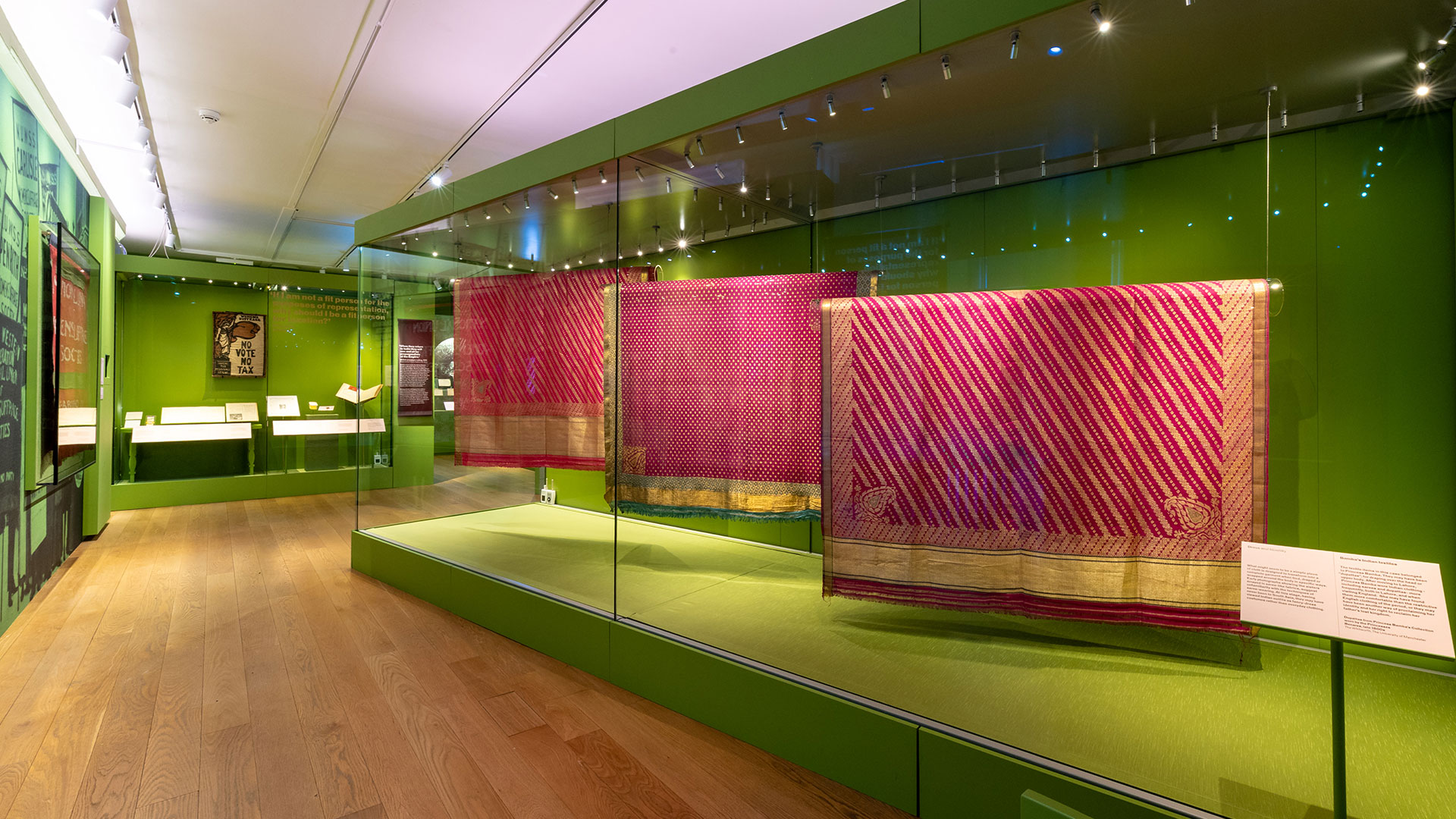
Raised in England to move within British society alongside her sisters, Bamba later travelled to India for the first time in the early 1900s during the grand Durbar celebrations for King Edward VII. What she witnessed there was far removed from the imperial spectacle, seeing poverty and a politically oppressed country with her own eyes. This experience had a lasting impact on her, and she would later settle in Lahore, becoming a passionate advocate for self-rule and Indian independence.
Reflections on The Last Princesses of Punjab and why this exhibition matters
Throughout the exhibition, I gained insight into the sisters’ dual identity as they navigate the Western world in adulthood while trying to reconnect with their Punjabi roots. This is evident in the display of their early childhood outfits and embroideries alongside photos from Bamba and Catherine’s time at Oxford, including dormitory decorations. These images demonstrate the presence of mixed heritage within this space, while the sisters' time at Oxford was instrumental in fostering their independence.
I was impressed by how the team linked the sisters' legacy to current British South Asian dual heritage communities, appealing to a new generation who may be discovering the sisters' historic legacy for the first time. I’d recommend taking time to watch the exhibition's short films, which are installed throughout the space. They talk about what it means to be of South Asian heritage and British, and reveal how difficult it can be to reconnect with one's heritage. However, they also show how this connection can be a force for good, as demonstrated by artists and designers who find inspiration in fabric and traditional art forms, young women who learn to be proud of their heritage and stand tall, and mothers who share the Singh sisters' stories with their daughters for the first time.
There are many inspiring stories that show the importance of keeping this legacy alive. The team behind Kensington Palace’s The Last Princesses of Punjab has included contemporary South Asian and British community members, as the princesses grew up in the UK, as many British South Asians did. Featuring contemporary voices in the which connects the past to the present. The short films are well worth watching, and it is worth spending some time hearing how the contributors relate to this part of history.
How to book tickets for the exhibition
Tickets for this exhibition are included in standard entry at Kensington Palace - book your tickets now.